

A knocked-out tooth in a child can happen in seconds. One moment everything is fine; the next, your child is in tears, and you are staring at a tooth in your hand. Knowing what to do in those first few minutes makes a real difference to how the situation unfolds.
The response depends entirely on one thing: whether the tooth is a baby tooth or a permanent adult tooth. The two situations call for completely different actions, and confusing them can cause further harm. Emergency dental care for children requires a clear head and the right first steps, and understanding which type of tooth has come out is where that starts.
Quick Overview
- A knocked-out baby tooth is a dental emergency, but the approach differs significantly from a knocked-out adult tooth
- It may apply to children of any age, though baby teeth are most common in children under 12, and the risk of dental trauma is higher during active play and sport
- What happens next depends on whether the tooth is a primary (baby) tooth or a permanent tooth, as each requires a different immediate response
- How the injury is managed in the first few minutes can affect the outcome for the surrounding teeth and the developing adult tooth underneath
- Seeing a dentist promptly after any dental trauma in a child is recommended, regardless of the type of tooth involved
Below, we explain the key differences between a knocked-out baby tooth and a knocked-out adult tooth, what to do at the scene, and when to seek urgent dental care.
Baby Tooth vs Adult Tooth: Why It Matters
 The most urgent question after a child knocks out a tooth is simple: is this a baby tooth or an adult tooth?
Baby teeth, also called primary teeth or milk teeth, begin to fall out naturally from around age six. Adult teeth, or permanent teeth, start appearing from roughly the same age and are the teeth a person keeps for life.
Baby teeth should not be reinserted after being knocked out. Attempting to reinsert a baby tooth can damage the developing permanent tooth sitting beneath the gum, cause the baby tooth to fuse to the bone, and interfere with how the adult tooth grows in later.
A knocked-out adult tooth, by contrast, needs to be reinserted or kept moist and taken to a dentist as quickly as possible, ideally within 30 minutes.
If a Baby Tooth Is Knocked Out: What to Do
Stay calm and comfort your child. Then follow these steps.
Control the bleeding. Have your child bite gently on a clean piece of gauze or a clean cloth. Apply gentle pressure to the area for around 10 minutes. Most bleeding from a knocked-out baby tooth will settle within this time.
Do not try to reinsert the tooth. This is the most important rule. Put the tooth safely aside to bring to the appointment, but do not attempt to place it back in the socket.
Rinse the mouth gently. If your child is old enough, have them rinse with a small amount of cool water to clear the area.
Call your dentist promptly. Even though the baby tooth will not be reimplanted, your child should still be seen. A dental injury in a child can affect surrounding teeth, soft tissues, and the developing adult tooth below. An X-ray may be needed to check for any damage that is not visible.
Watch for signs of infection. In the days after the injury, monitor the area for swelling, discolouration of nearby teeth, or your child complaining of pain. These can signal damage to the underlying tooth or an infection developing in the gum.
If a Permanent Tooth Is Knocked Out: Act Quickly
A knocked-out permanent tooth is a more time-sensitive situation. The sooner the tooth is reimplanted, the better the conditions for it to settle back in place, though outcomes are not guaranteed and depend on several factors.
Handle the tooth carefully. Pick it up by the white crown only. Do not touch the root. Do not scrub it.
Rinse briefly if dirty. Hold the tooth under cool running water for no more than 10 seconds if it has visible dirt. Do not use soap or any cleaning products.
Try to reinsert it. If the child is old enough and calm enough, gently guide the tooth back into its socket and have them bite down softly on a clean cloth to hold it in place.
If reinsertion is not possible. Place the tooth in a small container of milk, or tuck it inside the child’s cheek between the gum and lip so it stays moist in saliva. Do not store it in water.
Get to a dentist immediately. Dental injuries in children involving a knocked-out permanent tooth are time-critical. Call ahead so the clinic can prepare for your arrival.
A Considered Approach to Dental Trauma in Children
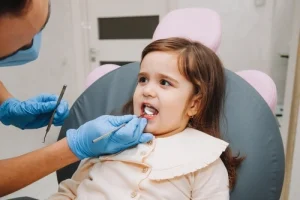 Dental trauma in children is more common than many parents expect. Knowing the difference between a baby tooth and a permanent tooth, and what to do in each case, puts you in a much better position when an accident happens.
Individual situations vary. The extent of trauma, the child’s age, and the condition of the surrounding teeth all influence what care is needed. A dental assessment after any tooth injury helps identify damage that may not be obvious at first glance.
If your child has had a tooth knocked out or experienced any dental trauma, call the team at Definitive Dental on (02) 6105 9833 or book below.
Book an emergency dental appointment
Note: Any surgical or invasive procedure carries risks. Before proceeding, you should seek a second opinion from an appropriately qualified health practitioner.
Frequently Asked Questions
Can a knocked-out baby tooth damage the adult tooth underneath?
Yes, it can. A hard knock that displaces a baby tooth can affect the permanent tooth developing beneath the gum. This is one of the main reasons a dental assessment is recommended after any dental trauma, even when the injury appears minor. An X-ray helps identify damage that is not visible to the eye.
How do I know if the tooth is a baby tooth or an adult tooth?
Baby teeth tend to be smaller and slightly more opaque in colour than adult teeth. Children typically start losing baby teeth from around age six, so if your child is under five, the tooth is almost certainly a baby tooth.
References
Better Health Channel. (n.d.). ‘Dental Injuries: Tooth Loss’. Better Health Channel. Melbourne, VIC: Victoria State Government. https://www.betterhealth.vic.gov.au/health/conditionsandtreatments/dental-injuries-tooth-loss
Healthdirect Australia. (2026). ‘Dental Injury’. Healthdirect Australia. Canberra, ACT: Australian Government. https://www.healthdirect.gov.au/dental-injury
Teeth.org.au. (n.d.). ‘Dental Trauma’. Teeth.org.au. Sydney, NSW: Australian Dental Association. https://www.teeth.org.au/dental-trauma