
Dental veneers are one of the more significant decisions in cosmetic dentistry. Unlike some dental treatments that can be fully reversed, veneers involve a preparation process that permanently changes the underlying tooth. Understanding what that means before going ahead is an important part of making an informed choice.
The answer to whether veneers are permanent depends on what type of veneer is being placed and how much tooth preparation is involved. Porcelain and composite veneers are thin shells bonded to the front surface of teeth, and the degree to which the procedure is considered permanent varies between the two options.
Quick Overview
- Dental veneers are thin shells bonded to the front surface of teeth to change their appearance
- They may apply to people looking to address discolouration, chips, gaps, or the overall shape of their front teeth
- Whether veneers are considered permanent depends on the material used and how much enamel is removed during preparation
- How long veneers last and how the underlying tooth is affected can vary between individuals and veneer types
- Understanding the distinction between permanent and reversible is an important part of the decision-making process
Below, we explain what makes veneers permanent, the difference between porcelain and composite, how long they last, and what to consider before going ahead.
What Makes Dental Veneers Permanent?
Veneers are considered permanent because the tooth preparation involved cannot be undone. Before a veneer is bonded, enamel is removed from the tooth surface to create space for it. Enamel does not regenerate, so regardless of what happens to the veneer itself, the underlying tooth has been permanently changed and will always need some form of coverage.
How permanent the procedure is depends on how much enamel is removed, and that varies between veneer types.
Porcelain vs Composite Veneers: Key Differences
Understanding the distinction between these two materials helps clarify what “permanent” means in practice.
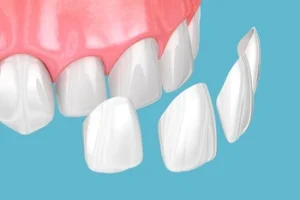
 Porcelain veneers are custom-made in a dental laboratory and bonded at a second appointment. They closely mimic the way natural tooth enamel reflects light, and they are resistant to staining from food and drink. Because enamel is removed during preparation, porcelain veneers are considered a permanent procedure.
Composite resin veneers are applied directly to the tooth in a single appointment, built up in layers and shaped by the dentist. They are generally less expensive and involve less tooth preparation, but they tend to be less durable than porcelain and more prone to staining over time, particularly from coffee, tea, and red wine.
For composite veneers, minimal tooth structure needs removing. For porcelain, however, some removal is necessary.
Neither type is designed to last forever. All veneers will eventually need to be replaced, regardless of the material.
How Long Do Veneers Last?
Longevity depends on the material, how the veneers are cared for, and individual habits.
Porcelain veneers are generally expected to last ten to twenty years before replacement is needed. Composite veneers tend to have a shorter lifespan of five to seven years. These are general ranges, and individual outcomes can vary significantly.
Several factors influence how long veneers last:
- Oral hygiene habits. Brushing twice daily with a non-abrasive toothpaste and flossing regularly helps protect both the veneer and the gum tissue around it.
- Diet and lifestyle. Biting into hard foods, using teeth to open packaging, and grinding teeth can all shorten the life of a veneer.
- Teeth grinding. People who grind or clench at night may be advised to wear a night guard to protect their veneers.
- Staining habits. Porcelain resists staining well, but the cement bonding the veneer can discolour over time with exposure to coffee, tea, and tobacco.
- Regular dental visits. Seeing your dentist regularly allows any wear or damage to be identified early.
What to Consider Before Getting Veneers
Because the preparation process for porcelain veneers permanently alters the tooth, it is worth taking time to consider the commitment involved.
Cosmetic dentistry treatments, including veneers, are elective procedures. They are not a requirement for dental health, and the decision to proceed should be made with a clear understanding of what the treatment involves, including both the benefits and the limitations.
A few questions worth considering before going ahead:
- Are my natural teeth and gums in good health? Veneers are generally not recommended for people with active gum disease or significant tooth decay, as these need to be addressed first.
- Am I comfortable with a long-term commitment? Once enamel is removed for porcelain veneers, the teeth will need some form of coverage indefinitely.
- Have I considered both material options? A conversation with your dentist about the differences between porcelain and composite, and which is more suitable for your teeth and lifestyle, is an important first step.
- Do I understand what the procedure involves? Understanding the preparation process, the number of appointments required, and how the treated teeth may look and feel is part of making an informed decision.
Individual outcomes from veneer treatment vary depending on the condition of the natural teeth, the material used, oral hygiene habits, and how well care is maintained over time.
A Considered Approach to Veneers
 Veneers can change the appearance of teeth in a meaningful way, but the decision to proceed, particularly with porcelain veneers, is one that has lasting implications. The enamel removal involved makes the procedure effectively irreversible for the treated teeth, which is why understanding the full picture before going ahead matters.
Composite veneers offer a less permanent alternative for people who want to improve the appearance of their teeth with less structural change, though they come with their own trade-offs in durability and stain resistance.
If you are thinking about veneers and would like to understand which option may be appropriate for your situation, we welcome you to get in touch with the team at Definitive Dental. Call us on (02) 6105 9833 or book below.
Book an appointment with Definitive Dental
Note: Any surgical or invasive procedure carries risks. Before proceeding, you should seek a second opinion from an appropriately qualified health practitioner.
Frequently Asked Questions
Are porcelain veneers reversible?
No. Porcelain veneers require the removal of a thin layer of enamel, which does not regenerate. Even if the veneers are removed later, the underlying tooth remains permanently altered and will need some form of coverage. This makes porcelain veneers a long-term commitment rather than a temporary change.
Can composite veneers be removed?
Composite veneers involve less or no enamel removal and can often be taken off with less impact on the underlying tooth compared to porcelain. In some cases, the tooth may be returned to something close to its original appearance, though the bonding process still involves conditioning the tooth surface. Your dentist can advise on what removal would involve for your specific situation.
References
Better Health Channel. (2025). ‘Cosmetic Dentistry and Teeth Whitening’. Better Health Channel. Melbourne, VIC: Victoria State Government. https://www.betterhealth.vic.gov.au/health/conditionsandtreatments/cosmetic-dentistry-and-teeth-whitening
Healthdirect Australia. (2026). ‘Veneers’. Healthdirect Australia. Canberra, ACT: Australian Government. https://www.healthdirect.gov.au/veneers
Teeth.org.au. (n.d.). ‘Crowns, Bridges and Veneers’. Teeth.org.au. Sydney, NSW: Australian Dental Association. https://teeth.org.au/crowns-bridges-and-veneers