

A broken wisdom tooth can cause discomfort, difficulty chewing, and sudden sensitivity. For many people, wisdom teeth appear later than other teeth, and they often erupt at an unnatural angle or without enough space, which makes them more likely to crack, chip, or break. A break in a wisdom tooth may seem like a minor issue at first, but it can quickly lead to sharp or throbbing pain, infection, or further complications if left untreated.
In this guide, you will learn why wisdom teeth break, what symptoms to look for, when to seek immediate treatment, and the most common treatment options recommended by dentists.
What a Broken Wisdom Tooth Is
A broken wisdom tooth occurs when one of your third molars cracks, chips, or breaks. Wisdom teeth are the last teeth to come in, and because of their location at the back of the mouth, they often erupt in ways that make them more vulnerable to pressure and damage.
 A break may involve:
- A small rough patch on the surface
- A piece of the tooth snapping off
- A fracture near the gum line
- A crack caused by grinding, biting, or natural wear
A broken tooth in the wisdom area is not always painful at the start. Some people notice sensitivity only when chewing or drinking cold water. Others feel sudden throbbing pain shortly after the break occurs.
The difficulty with wisdom teeth is their location. Because they are hard to clean, they often develop tooth decay, which weakens the tooth until a piece breaks off. If the break reaches the inner layer of the tooth, the nerves can become irritated, making it essential to see a dentist immediately.
Why Wisdom Teeth Break
Wisdom teeth break for several reasons. For some people, the tooth itself is weakened. For others, the angle or position makes breakage more likely.
Not enough space in the jaw
Many mouths do not have enough room for wisdom teeth. When this happens, the tooth may erupt sideways or partially, which puts pressure on the surrounding gums and other teeth. This pressure increases the risk of the tooth cracking.
Tooth decay
Because wisdom teeth sit so far back, brushing and flossing them properly is difficult. This often leads to tooth decay or cavities. When decay spreads, it makes the tooth structure weak and more likely to break into smaller pieces.
Natural wear and everyday habits
A wisdom tooth may break from:
- Biting down on hard foods
- Chewing hard candy
- Grinding the teeth during sleep
- Regular natural wear over time
Gum disease and inflammation
When the surrounding gums are inflamed due to gum disease, the area becomes more sensitive. Gum pockets can form, exposing more of the tooth and making it easier for a break to occur.
Impact from contact sports
A hit to the jaw during contact sports can chip or break a wisdom tooth. Even if you do not feel immediate pain, the impact may still create small cracks that get worse later, especially if there is already underlying decay.
Why a Broken Wisdom Tooth Needs Immediate Care
A cracked or chipped wisdom tooth does not heal on its own. Once the tooth structure has broken, bacteria can travel deeper into the tooth and gums, causing serious problems.
Here is why you should not wait.
1. Infection risk increases quickly
A break allows bacteria to reach deep areas. This can cause:
- Infection
- Swelling
- Ongoing pain
- Difficulty opening the mouth
- Spread of bacteria to other teeth
2. Further complications may follow
If the tooth stays broken, it can lead to:
- Gum abscesses
- Pain when chewing
- Damage to nearby molars
- Deep tooth decay
- Bone loss around the tooth
- A failed blood clot after extraction
3. Pain often gets worse
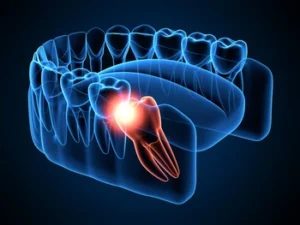 Even if the pain stops temporarily, the problem remains. It may return suddenly, especially at night or when eating hot or cold foods.
4. Broken wisdom teeth can chip more
A small break often leads to a bigger one. The tooth may break into several pieces, making future treatment more difficult.
This is why dentists recommend removing wisdom teeth when they break or show signs of infection or decay.
Treatment Options for a Broken Wisdom Tooth
Treatment depends on how badly the wisdom tooth is broken and whether the surrounding gums are affected. Here are the most common approaches a dentist may recommend.
Simple extraction
If the tooth is already loose or the break is small, a simple extraction may be possible. This is when the dentist makes a small movement to lift the tooth out without needing complex surgical steps.
Complex extraction
If the tooth has broken below the gum line or is stuck at an unnatural angle, a complex extraction may be needed. This often happens when:
- The tooth is impacted
- Pieces are trapped under the gums
- The break involves multiple fragments
A complex extraction may involve removing small sections of the bone around the tooth. Some people choose conscious sedation for comfort during these treatments.
After extraction:
- A blood clot forms at the extraction site
- You may need soft foods for a few days
- An ice pack or cold compress can help reduce swelling
- Your dentist will provide aftercare steps to follow, including a warm salt water rinse
Dental filling or root canal treatment
In rare cases where the wisdom tooth is not fully erupted and the break is small, a dental filling might be possible.
However, most wisdom teeth are difficult to reach and have unusual shapes, making fillings or root canal treatment complex.
Most dentists do not perform root canal therapy on wisdom teeth unless there is a specific reason to save the tooth. The shape and position of third molars usually make wisdom teeth removal the more predictable and effective option.
Dental implants, only in specific situations
If a wisdom tooth is removed, it is not replaced with dental implants. However, if damage spreads to other teeth or nearby molars that require removal, those missing teeth may be replaced with implants later.
Home care until your appointment
While waiting to see your dentist, you can manage symptoms with:
- A gentle warm salt water rinse
- A cold compress or ice pack
- Over-the-counter pain medications, if suitable for you
- Avoiding very hot or cold foods
- Eating soft foods
- Maintaining good oral hygiene
- Avoiding chewing on the broken side
None of these replaces professional care, but they help reduce discomfort until you receive immediate treatment.
Prevention Tips
A broken wisdom tooth is not always avoidable, especially when the tooth grows at an unnatural angle or there is not enough space in the jaw. However, some prevention tips can reduce the chance of breakage or infection.
Maintain good oral hygiene
Keeping the back of the mouth clean helps lower the risk of tooth decay, gum irritation, and pressure on the tooth. Brush the area gently and floss when possible. Although wisdom teeth are harder to reach, consistent cleaning helps protect healthy teeth around them.
Attend regular dental check-ups
Routine appointments allow your dentist to monitor third molars and check for early signs of dental decay, cracks, or infection. When issues are found early, a dentist can recommend removing wisdom teeth before they break.
Use mouthguards during contact sports
If you play contact sports, a custom mouthguard can protect your jaw and reduce the chance of impact-related cracks. Sudden hits can damage molars or create small fractures in wisdom teeth that later become a broken wisdom tooth problem.
Avoid chewing very hard foods
Crunching on hard candy or biting popcorn kernels can increase the chance of a crack or fracture. If your wisdom tooth is already partially erupted, biting pressure may worsen the break.
Final Thoughts
A broken wisdom tooth can be painful, worrying, and disruptive to your daily life. Because wisdom teeth are more vulnerable to natural wear, dental decay, and pressure from neighbouring molars, breakage is common. Once damaged, the tooth cannot repair itself, and delaying treatment may lead to infection, swelling, or further complications.
If you experience throbbing pain, sensitivity, swelling, or notice a missing piece of the tooth, seeking immediate treatment is important. A dentist can assess whether the tooth needs to be removed based on its position and the condition of the surrounding gums. In some cases, temporary support, such as a dental filling, may be possible, but many broken wisdom teeth require removal to protect nearby teeth and support long-term oral health.
If you are concerned about a broken wisdom tooth or want guidance on the safest way to manage your symptoms, you can book a consultation with us at Definitive Dental or call us on (02) 6105 9833.
Resources
Morgan, K. (n.d.). ‘Mouth Guards: Everything You Need To Know’. New York, NY, n.d. New York, NY: Colgate.
https://www.colgate.com/en-us/oral-health/selecting-dental-products/mouth-guards-everything-you-need-to-know
Cleveland Clinic Staff. (2024). ‘What To Do After Oral Surgery: Recovery and Self-Care’. Cleveland, OH, 5 July. Cleveland, OH: Cleveland Clinic.
https://health.clevelandclinic.org/post-op-recovery-oral-surgery
Mayo Clinic Staff. (2024). ‘Teeth grinding (bruxism)’. Rochester, MN, 27 December. Rochester, MN: Mayo Clinic.
https://www.mayoclinic.org/diseases-conditions/bruxism/symptoms-causes/syc-20356095
Note: Any surgical or invasive procedure carries risks. Before proceeding, you should seek a second opinion from an appropriately qualified health practitioner.