

When tooth decay removes part of a tooth’s natural structure, a filling restores its shape and function. What most people do not realise is that there are several different filling materials available, each with different properties, appearances, and applications.
The type of filling that suits a particular tooth depends on where it sits in the mouth, the size of the cavity, and individual factors your dentist will assess. Understanding the main options available can help you have a more informed conversation at your next appointment.
Quick Overview
- Dental fillings restore teeth damaged by decay or trauma, using one of several available materials
- They may apply to anyone with tooth cavities, cracked teeth, or worn tooth structure
- Material choice can affect appearance, durability, and how much natural tooth structure needs to be removed
- How long a filling lasts depends on the material used, the location of the tooth, and oral hygiene habits
- A dental assessment is needed to determine which filling type is appropriate for each individual situation
Keep reading to understand what each filling type involves, where each is best suited, and what to expect from the procedure.
What Is a Dental Filling?
A dental filling replaces tooth structure that has been lost to decay, fracture, or wear. Fillings protect the remaining natural tooth from further damage. Once the decayed material is removed, the dentist cleans the area and places the chosen filling material to restore the tooth’s shape and function.
There are two broad categories of fillings. Direct fillings are placed into the prepared cavity in a single appointment: most composite resin and glass ionomer fillings fall into this group. Indirect fillings such as gold inlays or porcelain restorations are custom-made at a dental laboratory and fitted at a second appointment.
Composite Resin Fillings
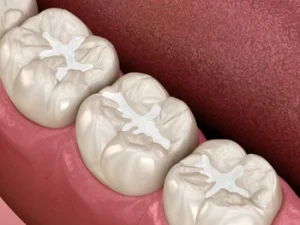 Composite resin is currently the most widely used filling material in Australia. It is tooth-coloured, made from a mixture of acrylic resin and fine glass particles, and can be closely matched to the shade of the surrounding tooth.
One of its key advantages is that it bonds directly to the tooth surface. This means less natural tooth structure needs to be removed during preparation compared to amalgam. The material is placed in layers, each hardened with a curing light, then shaped and polished.
Composite resin is suitable for both front and back teeth. It is a practical choice where appearance matters, though it can be more prone to staining over time than porcelain and may not last as long under heavy chewing forces as amalgam.
Amalgam Fillings
Dental amalgam is a silver-coloured filling material made from a mixture of metals including mercury, silver, copper, tin, and zinc. It has been used in dentistry for over 150 years and remains one of the most durable filling materials available.
Amalgam is strong and can withstand significant chewing pressure, making it well-suited for back molars. Its main drawbacks are its appearance and the fact that it requires more tooth structure to be removed during preparation, as it relies on the shape of the cavity rather than bonding to hold it in place.
Amalgam fillings have become less common in recent years, and some dentists no longer use them at all. If you already have amalgam fillings in good condition, they generally do not need to be replaced unless your dentist identifies a specific reason to do so.
Glass Ionomer Cement
Glass ionomer cement is a tooth-coloured material made from glass powder and an organic acid. It is not as strong as composite resin or amalgam but has one particularly useful property: it releases fluoride over time, which can help protect the surrounding tooth structure from further decay.
Glass ionomer is commonly used for:
- Fillings in children’s teeth
- Cavities near the gum line
- Temporary fillings between appointments
- Situations where fluoride release is clinically beneficial
Its lower durability means it is generally not recommended for areas that bear heavy biting pressure. A dentist may use it as an intermediate material while planning a longer-term restoration.
Gold and Porcelain Fillings
Gold and porcelain fillings are indirect restorations, meaning they are made outside the mouth, typically at a dental laboratory, and then cemented into place. This usually requires at least two appointments.
Gold fillings (inlays or onlays) are extremely durable and well-tolerated by surrounding gum tissue. They can last considerably longer than composite or amalgam, though their cost and appearance make them less common in everyday dental practice. They are sometimes recommended for back teeth where strength is the priority.
Porcelain fillings are tooth-coloured and more resistant to staining than composite resin. Gold and porcelain are long-lasting restorations that are custom-made to fit the exact shape of the prepared tooth. Because they are fabricated in a laboratory, they tend to fit with high precision. Their cost is generally higher than direct filling materials.
Temporary Fillings
Temporary fillings are used when a tooth needs treatment over multiple appointments, or when there is not enough time to complete a permanent restoration in one visit. They are also placed to protect a tooth cavity between root canal treatment appointments.
Temporary fillings are not designed to last. They are made from softer materials that can be removed easily at the next appointment. If a temporary filling falls out before your next visit, it is important to contact your dentist promptly to prevent the exposed tooth from further damage or infection.
What Influences Filling Material Choice?
No single filling material suits every tooth or every patient. The dentist’s choice is guided by several factors:
- Location of the tooth. Front teeth visible when smiling are generally treated with tooth-coloured materials. Back molars may tolerate stronger, less visible options.
- Size of the cavity. Large cavities may require more durable materials or indirect restorations. Small cavities are well-suited to composite resin or glass ionomer.
- Patient health factors. Certain conditions or medications may influence material choice. Amalgam is generally not used in children, pregnant patients, or those with specific medical conditions.
- Bite forces. Teeth that take on heavy chewing load may need stronger materials. Composite resin, while improved, may not always be the best option for heavily loaded molars.
- Aesthetic preference. Where appearance is a priority, tooth-coloured materials are preferred.
Your dentist will advise on the most appropriate option for your specific tooth and situation.
A Considered Approach to Dental Fillings
 Dental fillings are one of the most common restorative treatments in dentistry. The right material depends on the individual tooth, the extent of decay, and your broader oral health. No filling lasts indefinitely, and all require monitoring and eventual replacement.
Individual outcomes depend on the material used, oral hygiene habits, diet, and how closely you keep up with regular dental check-ups. If you have been told you need a filling or are concerned about a tooth, a clinical assessment is the clearest next step.
If you would like to discuss your options, we welcome you to get in touch with the team at Definitive Dental. Call us on (02) 6105 9833 or book below.
Book an appointment with Definitive Dental
Note: Any surgical or invasive procedure carries risks. Before proceeding, you should seek a second opinion from an appropriately qualified health practitioner.
Frequently Asked Questions
Which type of dental filling lasts the longest?
Gold fillings are generally considered the most durable, potentially lasting many years with proper care. Amalgam also has good longevity and can last a decade or more in high-pressure areas. Composite resin has improved significantly but may not last as long under heavy chewing forces. Porcelain restorations offer excellent durability and aesthetics. Individual longevity depends on the tooth’s location, bite forces, and how well oral hygiene is maintained.
How long does a filling procedure take?
A direct filling such as composite resin or amalgam is typically completed in a single appointment lasting 30 to 60 minutes, depending on the size and location of the cavity. Indirect fillings such as gold or porcelain require at least two appointments: one to prepare the tooth and take an impression, and a second to fit and cement the restoration.
References
Better Health Channel. (2025). ‘Dental Fillings’. Better Health Channel. Melbourne, VIC: Victoria State Government. https://www.betterhealth.vic.gov.au/health/conditionsandtreatments/dental-fillings
Healthdirect Australia. (2025). ‘Dental Fillings’. Healthdirect Australia. Canberra, ACT: Australian Government. https://www.healthdirect.gov.au/dental-fillings
Teeth.org.au. (n.d.). ‘Dental Fillings’. Teeth.org.au. Sydney, NSW: Australian Dental Association. https://teeth.org.au/fillings