

Wisdom teeth often arrive with a problem attached. When there is not enough space at the back of the jaw, these third molars can become impacted: stuck beneath the gum, pressing against nearby teeth, or erupting at an angle that causes pain and infection.
When a wisdom tooth becomes impacted, the symptoms can range from mild discomfort to recurring infection and damage to nearby teeth. Catching the issue early generally means a more straightforward path forward, which is why understanding what to expect matters before problems escalate.
Quick Overview
- Impacted tooth removal is a dental procedure to extract wisdom teeth that cannot fully and correctly emerge through the gum
- It may apply to people in their late teens or early twenties, though impaction can present at any adult age
- The procedure can involve a simple extraction or a more involved approach, depending on how the tooth is positioned and how deeply it sits in the jaw
- How long healing takes and what the experience involves can vary based on the number of teeth removed, the complexity of the impaction, and individual health factors
- Symptoms such as persistent pain at the back of the mouth, swollen gums, or recurring infection are often what prompt an assessment
Below, we explain what impacted wisdom teeth are, when removal may be recommended, what the procedure involves, and how recovery typically progresses.
What Is an Impacted Wisdom Tooth?
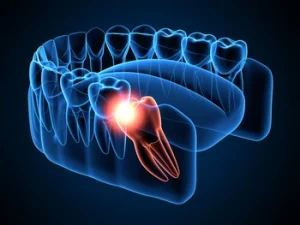 Wisdom teeth, also called third molars, are the last teeth to emerge at the very back of the mouth. They typically arrive in the late teens or early twenties. Because they come through last, the jaw is often already full, leaving little space for them to erupt in the correct position.
An impacted wisdom tooth is one that cannot fully emerge. It may be partially visible through the gum, completely hidden beneath it, or angled sideways into the tooth next to it. Lower wisdom teeth are more commonly impacted and tend to be more complex to remove than upper wisdom teeth.
Not every wisdom tooth needs to come out. Removing wisdom teeth is usually considered when they are causing ongoing problems or when dental X-rays show they are likely to.
When Does an Impacted Wisdom Tooth Need to Be Removed?
A wisdom tooth may need to be removed when it is causing, or is likely to cause, problems for your oral health. Your dentist will assess the tooth’s position using dental X-rays before recommending any treatment.
Common reasons for removal may include:
- Recurring pain or infection in the back of the mouth
- A partially erupted tooth that creates a flap of gum where bacteria can collect, causing an infection known as pericoronitis
- Decay forming in the wisdom tooth or in the tooth directly beside it, because the area is too difficult to clean
- The wisdom tooth pressing into nearby teeth and causing damage
- A cyst forming around an impacted tooth, which can affect the surrounding jaw bone
- The need to create space for orthodontic treatment
The longer a problematic wisdom tooth is left, the more damage it may cause to the teeth beside it. Addressing it sooner generally means a simpler procedure and faster recovery.
What Does Impacted Tooth Removal Involve?
The procedure itself depends on how the tooth is positioned and how much it has erupted.
For a partially erupted wisdom tooth that is accessible, a straightforward extraction may be sufficient. Your dentist will numb the area with a local anaesthetic, loosen the tooth, and remove it. You will feel pressure during the procedure but not pain.
For a more deeply impacted wisdom tooth, the procedure is more involved. A small incision is made in the gum to access the tooth. In some cases, a small amount of bone around the tooth is removed to allow it to be extracted. The tooth may be divided into sections so it can be removed more easily. Once removed, the area is cleaned and closed with dissolvable stitches.
Most patients go home the same day. The procedure typically takes between 30 and 60 minutes, though this varies depending on the number of teeth removed and the complexity of each extraction. In cases where all four wisdom teeth are removed or where the impaction is significant, a general anaesthetic may be an option. Your dentist will discuss what is appropriate for your situation.
What Are the Risks and Possible Complications?
Wisdom tooth removal is a common dental procedure, but like any surgical intervention, it carries some risk. Knowing what to watch for helps you seek attention promptly if needed.
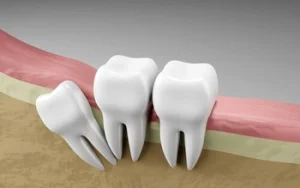 Dry socket is the most common complication after wisdom tooth removal. It occurs when the blood clot that forms in the tooth socket is dislodged or fails to develop, leaving the bone exposed. Symptoms include intense pain starting a few days after the extraction, an unpleasant taste, and bad breath. Dry socket is treatable. Your dentist can place a medicated dressing in the socket to ease discomfort and support healing. Dry socket and other post-removal complications are outlined clearly on the ADA’s consumer health site, which also recommends contacting your dentist promptly if pain worsens after the first couple of days.
Infection can occur if bacteria enter the extraction site. Signs include increasing swelling, pain that does not improve, fever, or a bad taste in the mouth. Your dentist may prescribe antibiotics if an infection develops.
Nerve involvement is a rare complication more associated with lower wisdom teeth, where the roots can sit close to a nerve that supplies sensation to the lip, chin, and tongue. Your dentist will review dental X-rays before the procedure to identify this risk and discuss it with you.
Impacted wisdom teeth are also associated with gum disease in the surrounding tissue, partly because the area at the back of the mouth is difficult to keep clean. Removing a problematic tooth removes that ongoing risk.
Caring for Your Mouth After Impacted Tooth Removal
Following your dentist’s aftercare instructions is the most important thing you can do to support healing and avoid complications.
General guidance after wisdom tooth removal:
- Bite firmly on the gauze provided to help the blood clot form in the socket
- Avoid rinsing, spitting forcefully, or using a straw for the first 24 hours: suction and pressure can dislodge the blood clot
- From 24 hours after the procedure, rinse gently with warm salt water after meals
- Stick to soft foods for the first few days and avoid anything crunchy, hard, or chewy
- Apply ice packs to the outside of the jaw to manage swelling in the first 24 to 48 hours
- Take any prescribed or recommended pain relief as directed
- Avoid strenuous physical activity for the first couple of days
- Do not smoke for at least 48 hours after the procedure
Swelling and mild discomfort in the first two to three days are normal. Most patients find that symptoms improve steadily from day three onward. If pain is increasing rather than easing after a few days, contact your dentist.
A Considered Approach to Wisdom Tooth Assessment
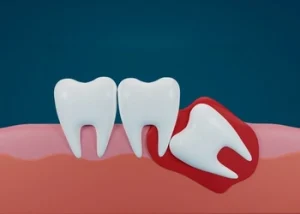 Not every impacted wisdom tooth needs immediate removal. Some can be monitored over time, while others are better addressed before they cause further damage to nearby teeth or the surrounding bone. The right course of action depends on your individual situation, the position of the tooth, and your current oral health.
Individual outcomes from impacted tooth removal vary depending on the complexity of the extraction, the number of teeth involved, and how closely aftercare instructions are followed.
If you have been experiencing pain or discomfort at the back of your mouth, or if you have been told you may have an impacted wisdom tooth, we welcome you to get in touch with Definitive Dental in Griffith, Canberra. Call us on (02) 6105 9833 or book below.
Book an appointment with Definitive Dental
Frequently Asked Questions
Do impacted wisdom teeth always need to be removed?
Not always. If an impacted wisdom tooth is not causing pain, infection, decay, or damage to nearby teeth, your dentist may recommend monitoring it over time rather than removing it immediately. The decision depends on the tooth’s position, your overall oral health, and any symptoms you are experiencing. Regular dental X-rays help track whether the situation is changing.
How long does recovery from wisdom tooth removal take?
Most patients feel well enough to return to normal activities within three to seven days. Healing of the gum and underlying bone takes longer, often several weeks. The timeline varies depending on how many teeth were removed, how complex the extraction was, and how closely aftercare instructions are followed. Lower impacted wisdom teeth generally take longer to heal than upper ones.
Note: Any surgical or invasive procedure carries risks. Before proceeding, you should seek a second opinion from an appropriately qualified health practitioner.
References
Australian Dental Association. (2024). ‘Dental Health Week 2024 #1: Bleeding Gums Are a Red Flag’. Australian Dental Association. Sydney, NSW: Australian Dental Association. https://ada.org.au/dental-health-week-2024-1-bleeding-gums-are-a-red-flag
Better Health Channel. (n.d.). ‘Wisdom Teeth’. Better Health Channel. Melbourne, VIC: Victoria State Government. https://www.betterhealth.vic.gov.au/health/conditionsandtreatments/wisdom-teeth
Healthdirect Australia. (2026). ‘Removing Wisdom Teeth’. Healthdirect Australia. Canberra, ACT: Australian Government. https://www.healthdirect.gov.au/surgery/removing-wisdom-teeth
Teeth.org.au. (n.d.). ‘Wisdom Teeth’. Teeth.org.au. Sydney, NSW: Australian Dental Association. https://www.teeth.org.au/wisdom-teeth