
A brighter smile is one of the most common reasons people ask about teeth whitening, and one of the most common worries is whether it harms the teeth. So, does teeth whitening damage enamel? It helps to know that whitening only acts on natural teeth, so it won’t change the colour of fillings, crowns or dental implants.
At DF Canberra Emergency Dentist, we check your teeth and gums first and explain your whitening options clearly, so you know what to expect before any treatment begins.
Quick Overview
- Teeth whitening uses peroxide-based gels to lighten the colour of natural teeth, but how those gels interact with enamel depends on how they’re used.
- Professional teeth whitening is generally considered safe for healthy teeth, though it isn’t suitable for everyone.
- Some people notice temporary sensitivity or gum irritation, and the strength of the product and how often it’s used can change that risk.
- Worn enamel, cracks, untreated decay and existing dental work can all influence how your teeth respond.
- A dental check before you start usually shapes which whitening method, if any, suits your teeth.
Below, we explain how whitening works, what the research shows about enamel, and how to whiten your teeth safely.
Does Teeth Whitening Damage Enamel?
When it’s used as directed on healthy teeth, teeth whitening is not generally associated with lasting harm to tooth enamel. Peroxide gels can cause small, short-term changes on the enamel surface. The bigger risks tend to come from overuse, high-strength products used without supervision, and teeth that weren’t checked first.
Enamel is the hard, outer layer of your teeth. It protects the softer dentine underneath. Whitening gels pass through the enamel to break down stains, but they’re not designed to strip enamel away the way acidic foods or heavy brushing can.
That said, “generally safe” doesn’t mean risk-free. How your teeth respond depends on the condition of your enamel, the product you use, how long it stays on your teeth and how often you repeat it. This is why a dental professional usually looks at the whole picture before recommending whitening.
How Does Teeth Whitening Work?
 Most whitening products rely on one of two bleaching agents: hydrogen peroxide or carbamide peroxide. Carbamide peroxide breaks down into hydrogen peroxide once it’s in the mouth, so both work through the same active ingredient. Carbamide peroxide simply releases it more slowly.
Peroxide moves through the enamel and reacts with stain molecules inside the tooth. These are often the deeper stains left by coffee, tea, red wine, smoking and ageing. The reaction breaks the stain molecules into smaller pieces that reflect less colour, so the tooth looks lighter.
This is different from how whitening toothpaste works. Most whitening toothpastes remove surface stains with mild polishing ingredients, so they won’t change the natural colour of the tooth much.
Which stains respond to whitening?
Yellow-toned stains from food, drinks and ageing tend to respond well. Grey or brown discolouration from medication, injury or a tooth that has had root canal treatment may respond less, or not at all. Deeper discolouration like this may need a different approach, such as porcelain veneers, after a proper assessment.
Can Teeth Whitening Weaken Tooth Enamel?
Teeth whitening may cause slight, short-term softening of the enamel surface. In most healthy mouths, saliva and fluoride appear to help the enamel recover. The strength of the product, how often it’s used, and the condition of your teeth tend to shape the risk.
Enamel loses and regains minerals throughout the day. Acids from food and drink draw minerals out, and saliva helps put them back. Peroxide gels can add to that mineral loss for a short time, which is why some tests show a small drop in enamel hardness straight after whitening.
Laboratory results don’t always reflect what happens in a real mouth. One review of laboratory studies on whitening and enamel hardness found that only about half of the 166 whitening treatments tested caused a measurable drop. Softening was more common when samples were kept in artificial saliva rather than human saliva, and when no fluoride was used during or after whitening.
For you, this means everyday habits matter. Brushing with fluoride toothpaste, keeping your mouth hydrated and spacing out whitening sessions may all help your enamel recover between treatments. If your enamel is already thin or worn, a dentist can check whether whitening is a reasonable choice before you start.
Professional Teeth Whitening vs Over-the-Counter Products
The main differences between professional and at-home teeth whitening come down to strength, fit and supervision.
In Australia, whitening products are grouped by peroxide strength. Products with up to 6% hydrogen peroxide, or up to 18% carbamide peroxide, can be sold to the public with safety warnings. Stronger products may only be supplied and used by registered dental practitioners as part of their practice.
 Here’s how the common whitening methods compare:
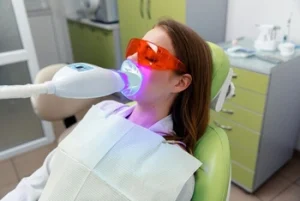
- In-office whitening: a higher-strength gel is applied in the dental chair. Your gums and lips are covered first, and the dentist controls how long the gel stays on and watches how your teeth respond.
- Take-home whitening with custom trays: your dentist makes trays shaped to your teeth and gives you a lower-strength gel with instructions on how much to use and for how long.
- Whitening strips and pens: these over-the-counter products use lower peroxide levels. They’re designed to fit everyone, so the gel may not stay where it should.
- Whitening toothpaste: this mainly removes surface stains and has a limited effect on the tooth’s natural shade.
Our professional teeth whitening includes both in-chair and take-home options, which can be discussed at your appointment. Neither option suits every patient, and the right choice depends on your teeth, your gums and the type of staining you have.
What Affects Whether Teeth Whitening Damages Enamel?
Several factors can change how your teeth and gums respond to whitening:
- Product strength: higher peroxide levels work faster but may cause more sensitivity if they aren’t managed carefully.
- Contact time and frequency: leaving gel on for longer than directed, or whitening too often, increases the chance of irritation and sensitivity.
- Worn enamel: thin or worn enamel lets more of the yellow dentine show through. It can also make teeth more sensitive to whitening.
- Cracks, decay and exposed roots: whitening gel can reach the inner tooth through these areas and may cause discomfort or further problems.
- Gum disease: inflamed gums are more likely to become irritated by whitening agents.
- Existing dental work: fillings, dental crowns and veneers won’t lighten, so they may look darker next to whitened natural teeth.
- Acidic foods and drinks: having lots of soft drink, citrus, or wine around the time of whitening may add extra wear to the enamel surface.
This is why the outcome depends on your individual situation. Two people using the same product can have quite different experiences.
Can Teeth Whitening Cause Tooth Sensitivity and Gum Irritation?
Yes, tooth sensitivity is the most common side effect of teeth whitening. It usually feels like a short, sharp twinge, often when you have cold or hot foods and drinks. For most people, this temporary sensitivity settles within a few days of finishing treatment.
Sensitivity happens because peroxide passes through the enamel and dentine and briefly irritates the nerve inside the tooth. It’s usually mild, but it can be stronger if you already have sensitive teeth or untreated decay. Whitening is not recommended for some people, including those with sensitive teeth or cracks in their teeth, as the bleach may cause pain or further damage.
Gum irritation is the other common concern. It’s more likely when gel spreads onto the gums, which can happen with trays that don’t fit well. Irritated gums may look white or feel sore for a short time and usually settle once the gel is removed and whitening is paused.
If you notice ongoing pain, swelling or sensitivity that doesn’t ease, it’s a good idea to stop whitening and have your teeth checked.
How to Whiten Your Teeth Safely and Protect Your Enamel
A few practical steps can help you whiten your teeth safely and look after your enamel at the same time.
Before whitening
- Have a dental check-up so any decay, cracks, leaking fillings or gum problems can be treated first.
- Ask about a professional cleaning. Removing plaque and surface stains first can help whitening work more evenly, and it is sometimes enough to whiten teeth on its own.
- Talk through any existing dental work that may not match once your natural teeth are lighter.
During whitening
- Follow the instructions for how much gel to use and how long to wear it.
- Don’t use more than one whitening product at the same time.
- Take a break if your teeth become sensitive, and let your dentist know.
- Use a toothpaste for sensitive teeth if your dentist recommends one.
After whitening
- Brush twice a day with a fluoride toothpaste and clean between your teeth daily.
- Limit coffee, tea, red wine and acidic foods for a day or two, as teeth may pick up stains more easily straight after whitening.
- Wait about an hour after acidic foods or drinks before brushing to avoid brushing softened enamel.
- Keep up regular dental visits so your enamel and gums can be monitored over time.
Whitening results fade over time, and how long they last varies from person to person. Your diet, smoking and oral care all play a part.
A Considered Approach to Teeth Whitening
 For most people with healthy teeth, whitening under a dentist’s guidance is considered a reasonable way to lighten stains, with temporary sensitivity being the most common side effect. The bigger concerns tend to come from strong products, overuse and teeth that haven’t been checked first.
If you’d like to find out whether whitening may suit your teeth, or you’d like to talk through other cosmetic dental options, our team is happy to help. We’ll look at your enamel, gums and any existing dental work, then explain your options in plain language so you can decide what feels right for you. Individual outcomes vary.
Call DF Canberra Emergency Dentist on (02) 6105 9833 or book an appointment online.
Frequently Asked Questions
Is professional teeth whitening safe?
Professional teeth whitening is generally considered safe for people with healthy teeth and gums. A dentist checks your mouth first, protects your gums during treatment and adjusts the approach if sensitivity develops. It isn’t suitable for everyone, so an assessment comes first.
How long does tooth sensitivity last after whitening?
Sensitivity after whitening is usually temporary and often settles within a few days. A toothpaste for sensitive teeth and short breaks between whitening sessions may help. If sensitivity is severe or doesn’t ease, stop whitening and see your dentist.
Are whitening strips bad for your enamel?
Whitening strips that meet Australian limits use lower peroxide levels and are not generally linked with enamel damage when used as directed. Because they aren’t fitted to your teeth, the gel can reach your gums and cause irritation. Overusing them, or using them on teeth with decay or cracks, may also increase sensitivity.
Can you whiten teeth with worn enamel?
It may be possible, but worn enamel can make teeth more sensitive and may limit how white they look, because the yellow dentine underneath shows through. A dentist can check how much enamel you have and whether whitening, veneers or another option is more suitable.
References
- Attin T, Schmidlin PR, Wegehaupt F, Wiegand A. Influence of study design on the impact of bleaching agents on dental enamel microhardness: a review. Dental Materials. 2009;25(2):143-157. doi:10.1016/j.dental.2008.05.010. https://doi.org/10.1016/j.dental.2008.05.010
- Australian Dental Association. Policy Statement 2.2.8: Teeth whitening (bleaching) by persons other than dental practitioners. Australian Dental Association. Accessed 28 October 2026. https://ada.org.au/policy-statement-2-2-8-teeth-whitening-bleaching-by-persons-other-than-dental-practitioners
- Healthdirect Australia. Teeth whitening. healthdirect, Australian Government. Accessed 28 October 2026. https://www.healthdirect.gov.au/procedures/dental-procedures-and-appliances/teeth-whitening
- Chen E. 4 reasons to see a dentist for teeth whitening. Teeth.org.au, Australian Dental Association. Accessed 28 October 2026. https://teeth.org.au/4-reasons-to-see-a-dentist-for-teeth-whitening